
Introduction
If you look around your neighborhood, you will notice many homes have dark, ugly black streaks running down their asphalt shingles. Many local property owners assume their roof is simply aging, rotting, or burning under the intense sun along the I-45 corridor. However, those stains aren’t dirt or soot—they are actually a living, destructive organism that is eating away at your home’s value.
Meet Gloeocapsa Magma: The Shingle Eater
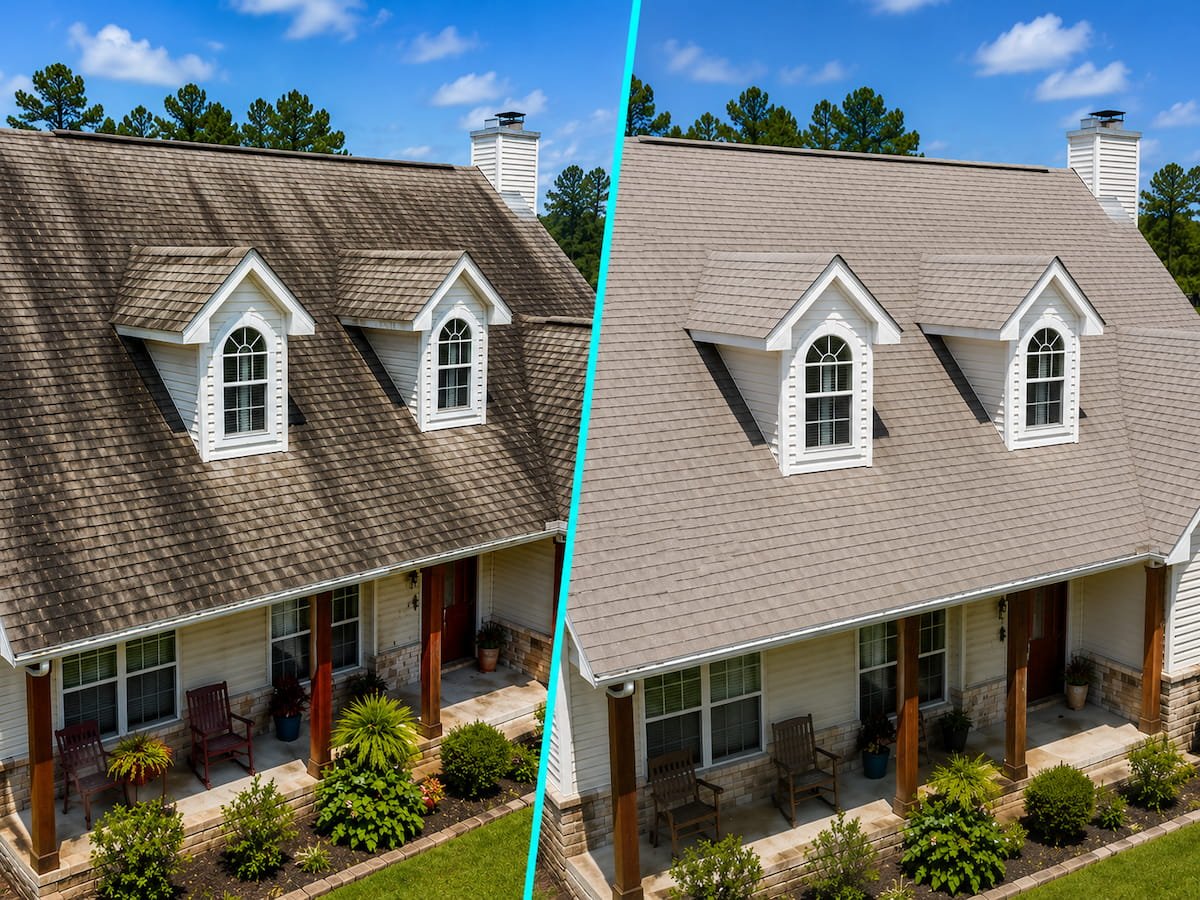
The true culprit behind those black streaks is a hardy, photosynthetic cyanobacteria called Gloeocapsa magma. This airborne bacteria lands on your shingles and thrives in our hot, humid environment. It feeds directly on the limestone filler used by manufacturers to manufacture modern asphalt shingles. As it grows and spreads, it leaves behind a dark, protective UV crust that creates those unsightly black streaks.
Why You Shouldn’t Ignore It
Leaving these stains untreated does more than hurt your home’s curb appeal. Over time, this bacterial growth breaks down the structural integrity of your shingles, causing them to lose their protective granules and trap heat. This can skyrocket your summer cooling bills and force you into a premature, incredibly expensive roof replacement.
How to Safely Remove the Stains
You should never use high-pressure water to blast these streaks away. Blasting a roof with a standard pressure washer will instantly rip the granules right off your shingles, permanently ruining your roof. Instead, professional exterior cleaners utilize a specialized process called soft washing.